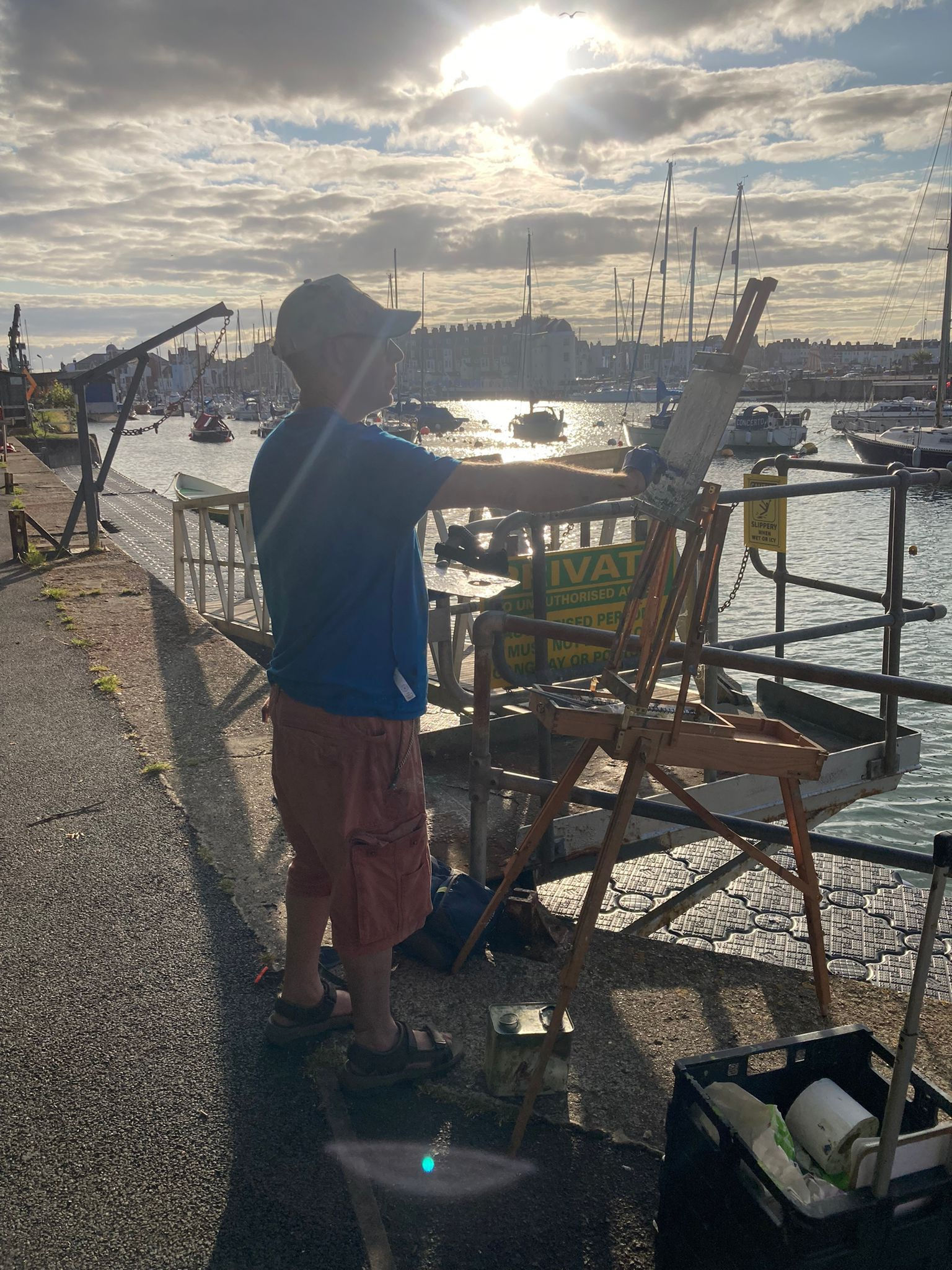
Michael Weller shares his story of being drawn – blinking into the light – from the comfort of his garden shed, where he paints still life, to the unpredictability of painting plein air, with the occasional passer-by offering their thoughts ... whether he asked for them or not.
In Boscombe in Dorset, there’s a supermarket that sells kosher sausages. It’s an hour’s drive from Winchester. My parents go there and then they sit on the beach.
They invite me along, but I’m a still-life painter. I like oil paint – three colours and white.
I paint the same things: a milk bottle, a packet of coffee, fruit. I move them around.
Weeks go by, then we go to the beach. In front of the car park, the sea looks wonderful. I always forget about that.
I bring my sketchbook, but it’s unsatisfying somehow, without paint. I bring my oil paints, a wooden pochade and a tripod. Together they weigh about a ton.
There are buoys in the sea, and steps leading down to it. The steps divide up the space in a way that seems very useful to an abstract artist like me.
My father sits in the car, in the car park. He doesn’t like to leave the car. As I paint, my mother sits next to me in her deckchair.
An old woman walks slowly over to us. “Do you sell your work?” she asks. I say, “I do sometimes.” “Oh, do you? How much do you sell them for? Five pounds?” “A bit more than that,” I say crossly. “Really?” she says. “Ten?” After she leaves, my mother says, “What a nice lady.”
I take my paints to the yacht club by the pier. It’s quiet there, though the boats catch the wind and make eerie clinking sounds.
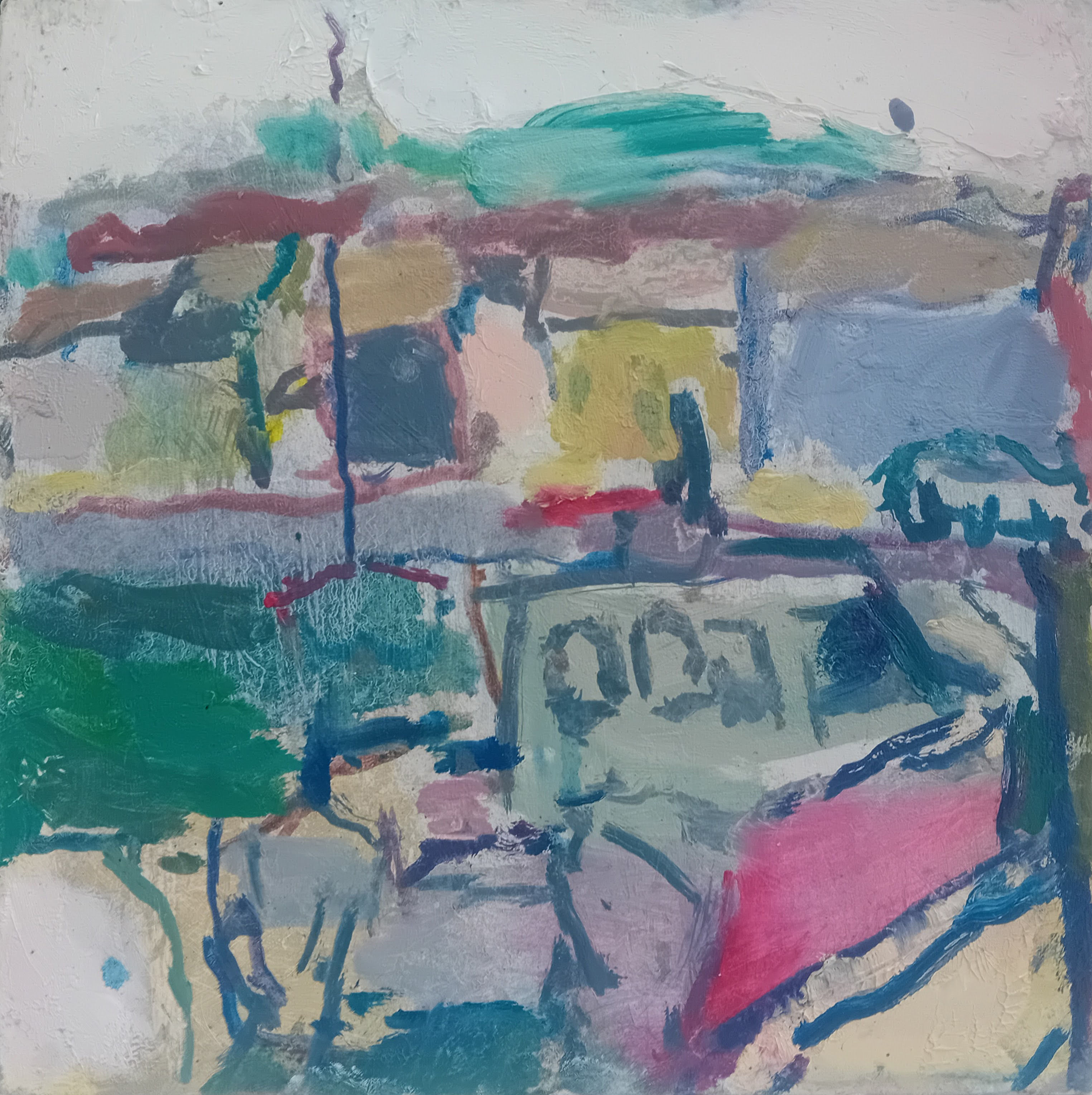
Ocean Whispers, Weymouth Harbour
Boats are difficult to draw, the passers-by tell me, and there’s all the blues – the blue of the sky, the sea, the boats.
Still life is difficult too. I decide I’m a still-life painter. I think of the landscape painters, having a nice day out with their friends and going to the pub afterwards, but I’m a more serious artist.
A few years ago, I moved to Dorset. The harbour is nearby, and the sea. The house has a shed in the garden where I paint.
I paint simple things: cups, bowls, fruit, a milk bottle. I move them around till they seem interesting.
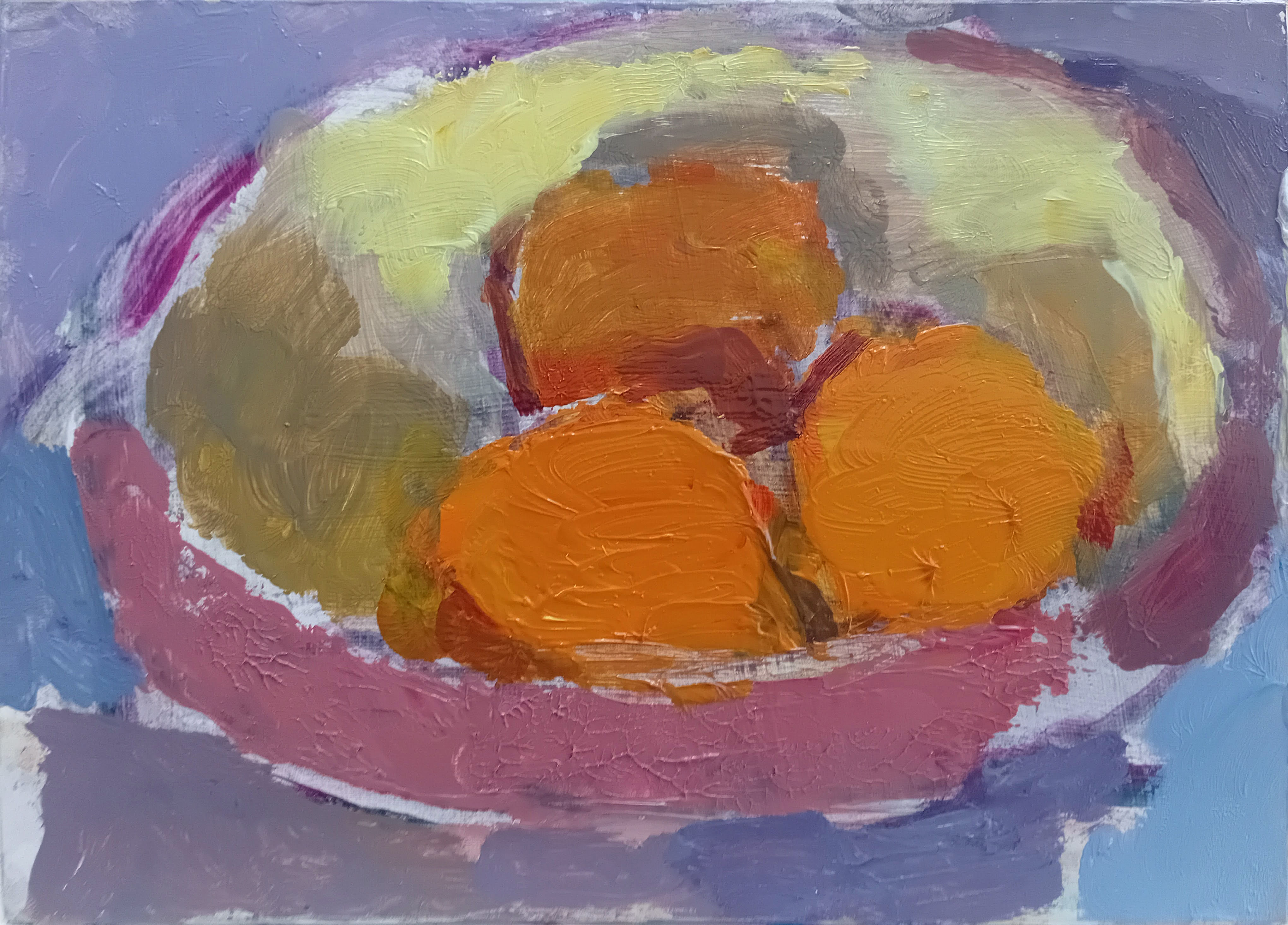
Apricots in a Red Bowl
After about a year, I open the shed door to let in more light.
An art dealer says firmly, “I really like your boat pictures.”
Noisily, I wheel my trolley of painting materials to the harbour. Someone walking ahead turns round to give me a look.
Sometimes people talk to me. They tell me I have paint on my face. In fact, everyone says it.
My friend has given up painting and wants to give me her oil paints. I say, “Are you sure?” She’s thought about it and is sure. I feel bad but accept anyway. Now I have some green paints and more blues.
“Cold green sea, pale purple sky. Mark Rothko would like this,” I think.
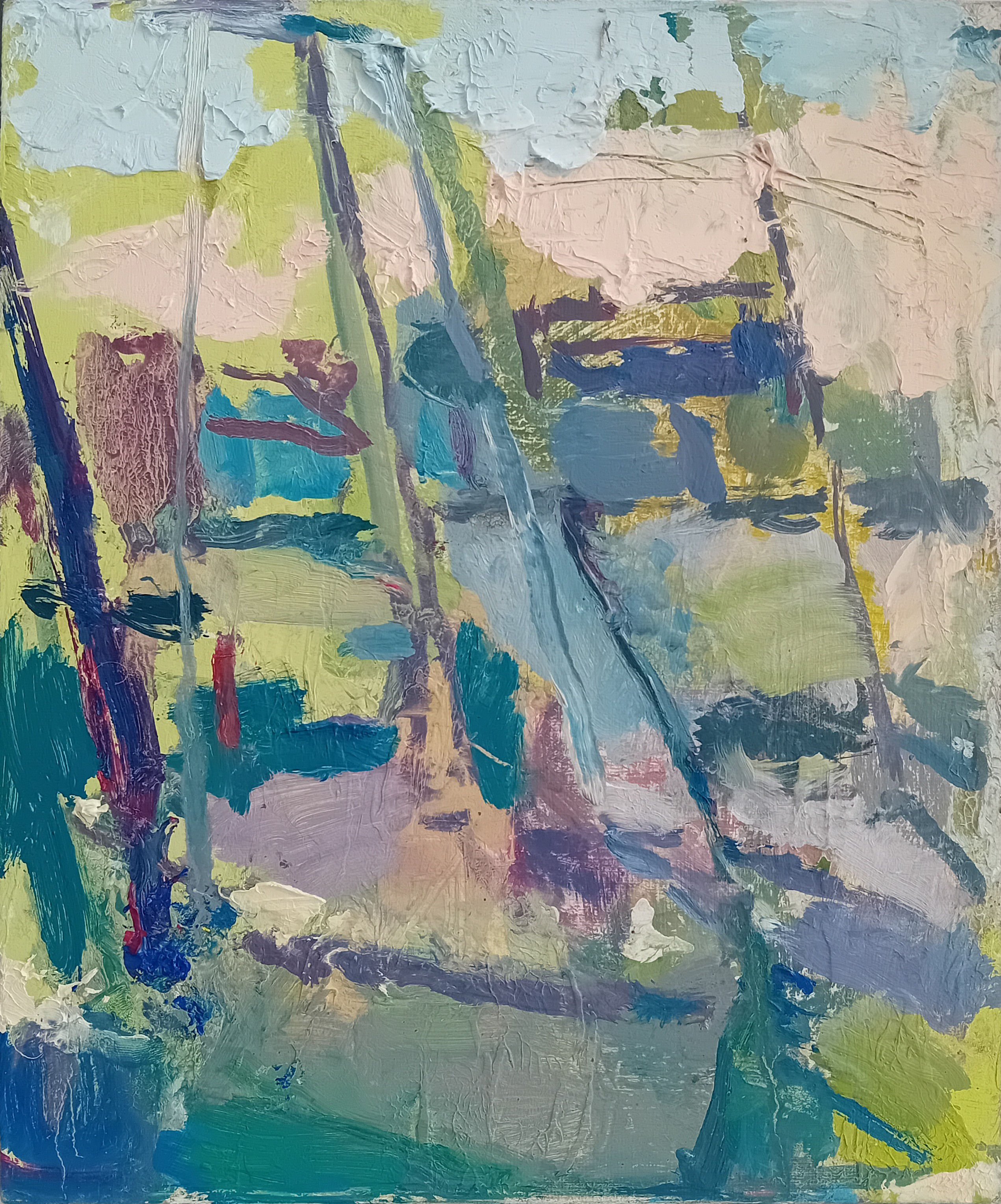
Clarion, Weymouth Harbour
It’s a working harbour. I like to be unobtrusive, with my fold-up field easel that leans to one side.
No one seems to mind. I talk to someone from a local magazine. A policewoman walks over to me. She recognises me from the magazine’s Facebook page. “Fame at last!” she comments.
Sometimes the boat sails away.
My painting isn’t going as well as I’d hoped. A woman asks me what I’m painting. I say, “The boat right in front of me.”
I stick out my tongue when I’m concentrating, another woman says. “Everyone does, darling.” She pats me on the arm.
A man from Yorkshire asks, “Are you retired?” I say, “This is my work.” He asks, “Do you sell your work in shops?” I say, “I sell in a few galleries,” and think, “I’m making this even worse but let’s just go with it.” He says, “I can see you’ve just started. It’s obvious you’re just laying it in.” I start to scrub out a big area. He says, “You’ve just parked the Rolls-Royce round the corner, haven’t you? Anyway, all the best for the future,” and I say, “You too.” He obviously means well.
I’m painting a boat again. Someone asks very gently if I’m going to finish the painting when I go home.
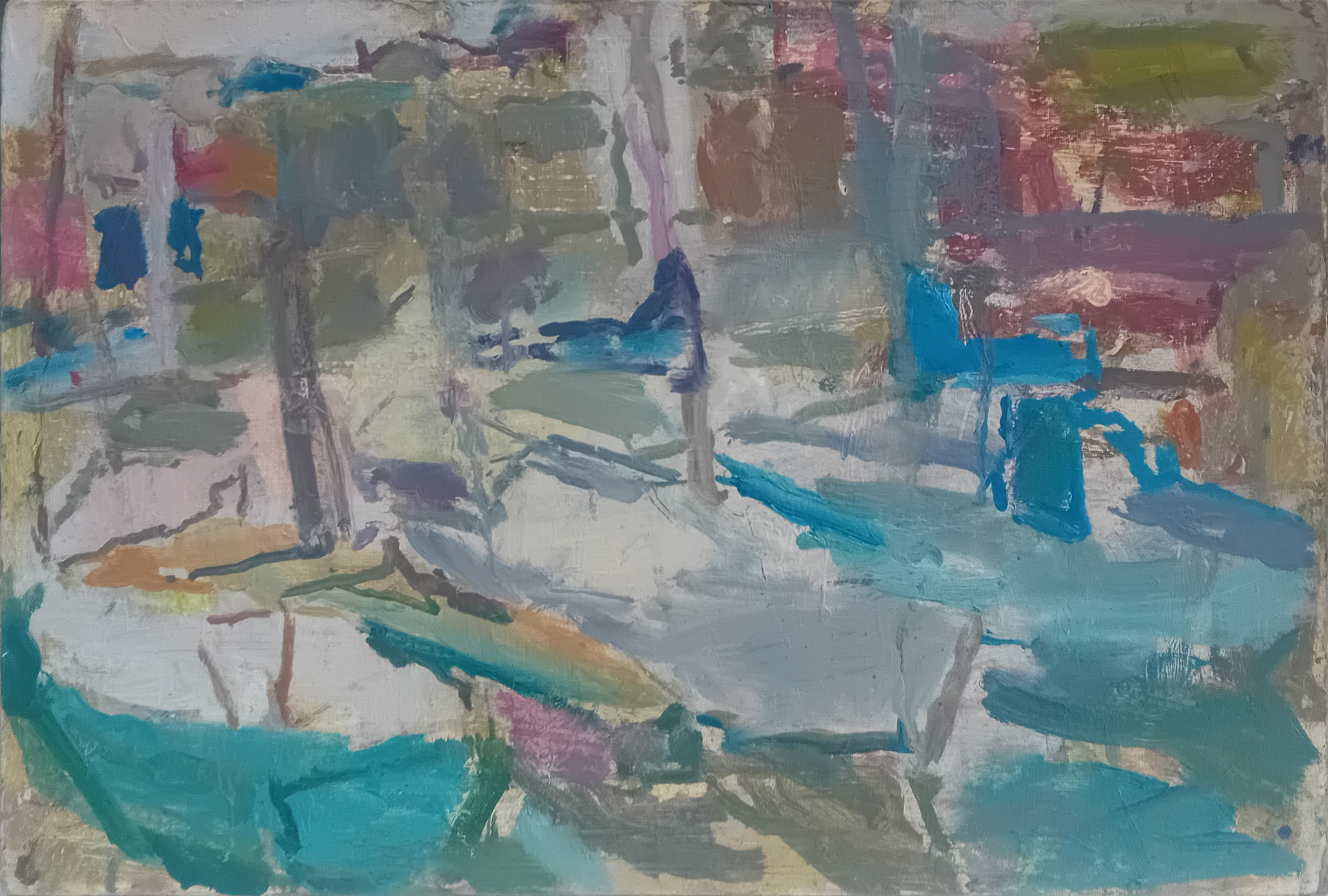
Ibis, Moon Shadow and Contessa
Three of us go to the art dealer’s house. My work is upstairs. My big boat painting is in the bathroom. It’s light in the room.
I do more paintings by the harbour. Other artists like the boat pictures. I think, but don’t say, “What’s wrong with the still-life pictures?”
Sometimes the cat from next door comes and sits in the shed as I paint. It’s warm. The cat pads around, sits on a pile of paper and looks content.
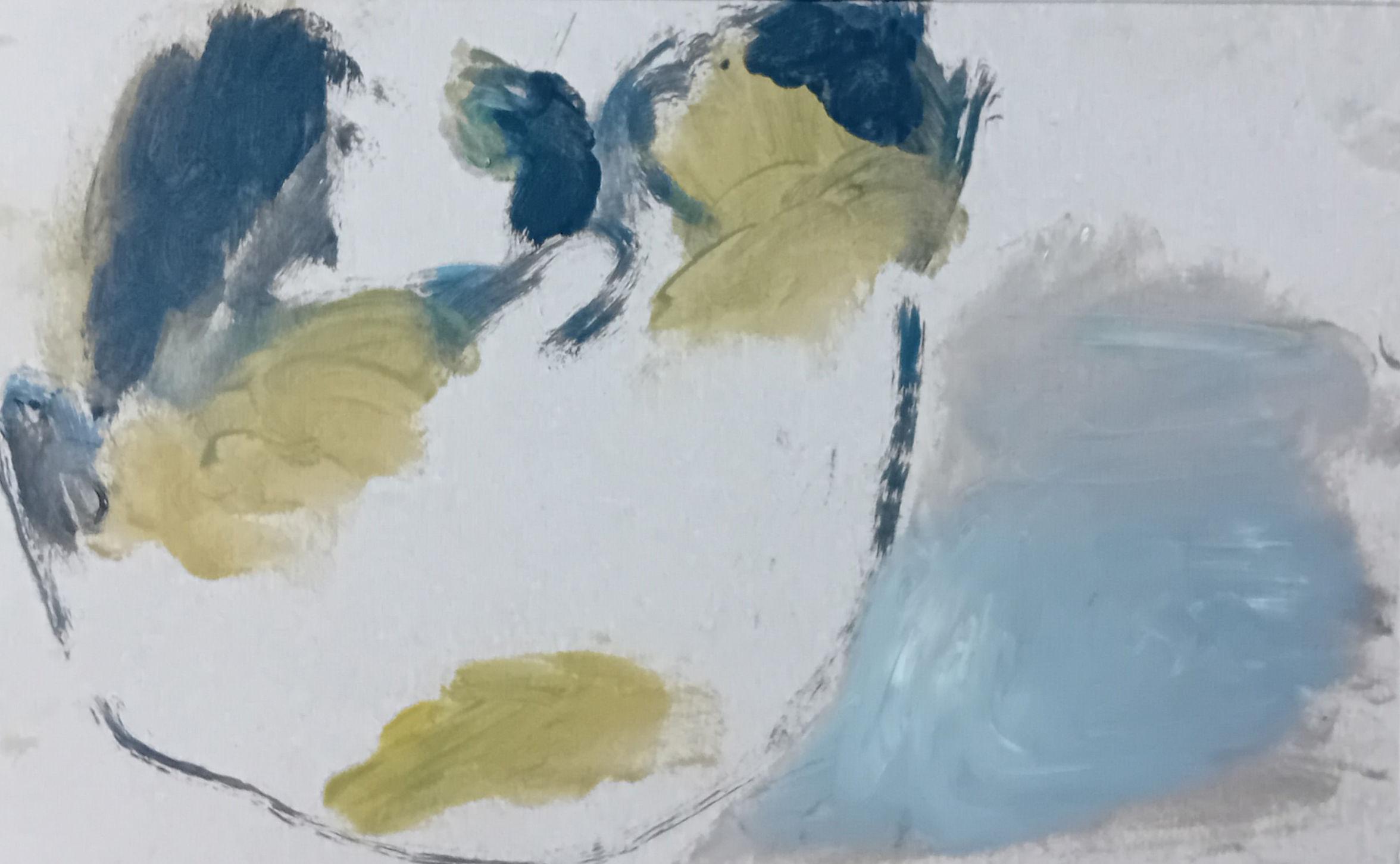
The Cat From Next Door
I join a competition to paint in a sunflower field. There’s a stand that sells coffee. I tell the girl I’ve never painted sunflowers. She says it’s going to be great. There are other people painting too. I ignore them and do my painting. If I abstract it a bit, it will be all right.
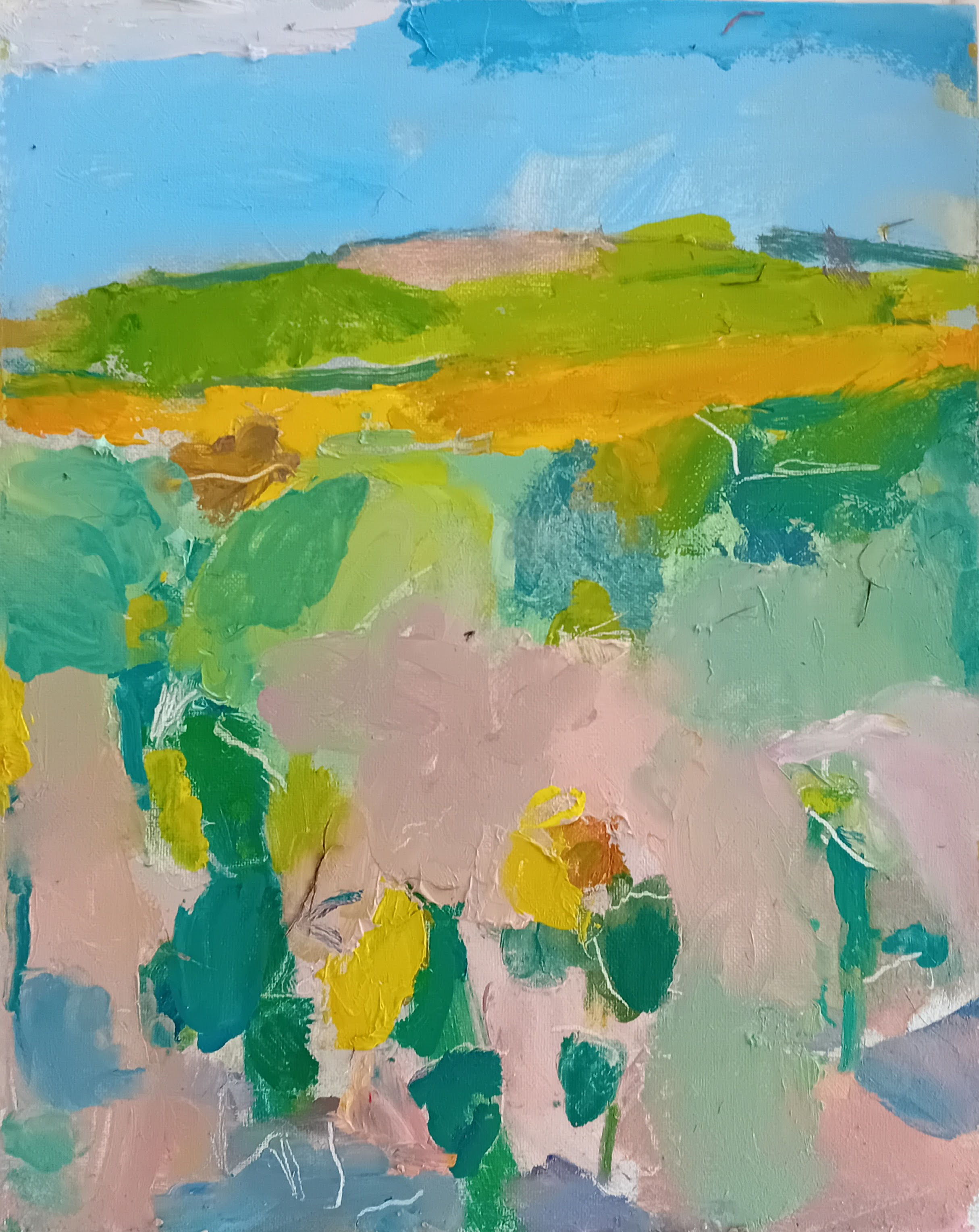
Sunflower Field
I try painting roses in a glass. I envy artists who can do this. I tell myself, “I can paint it in a more modern way, more abstract.”
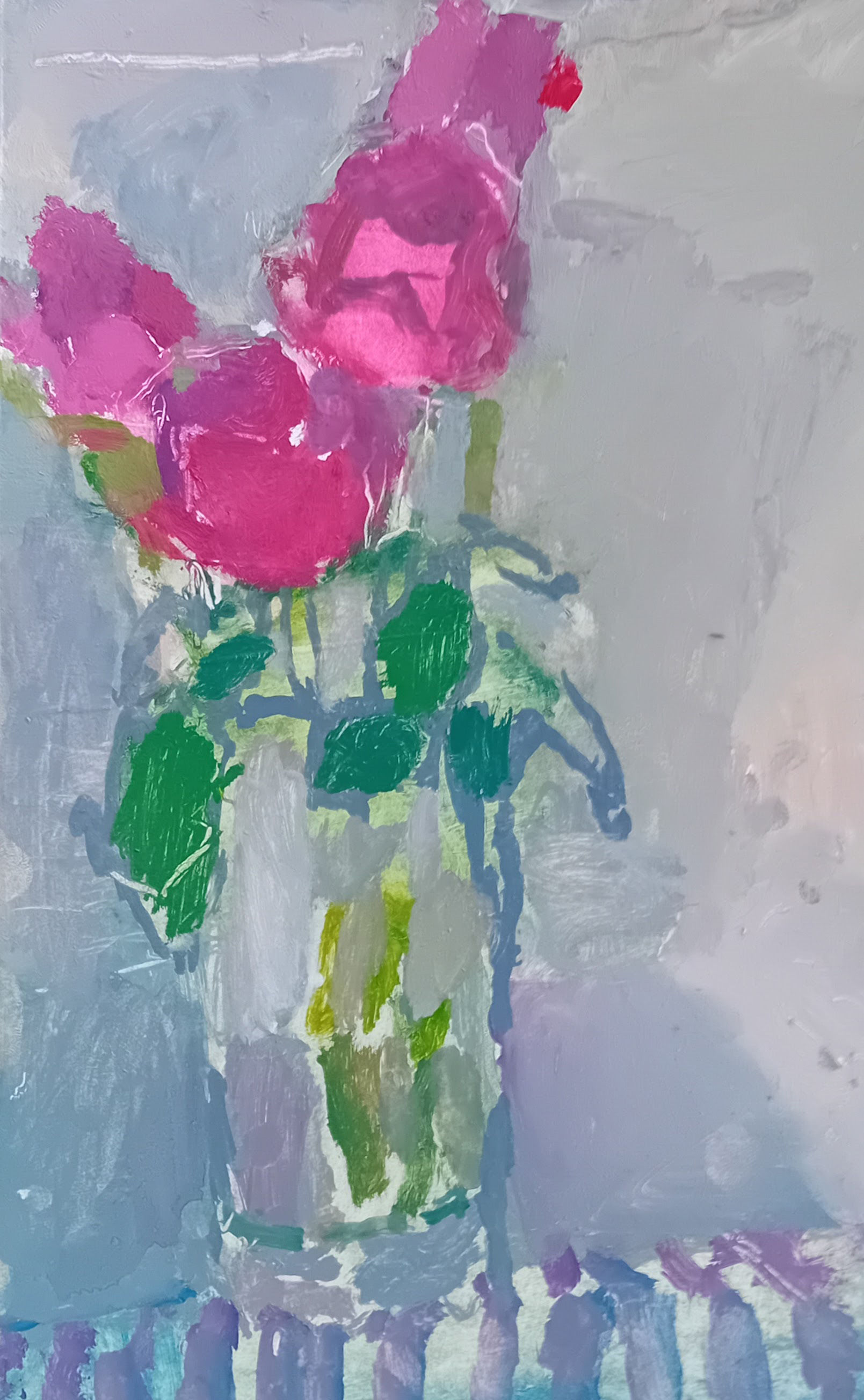
Roses, September 8
The roses have faded in my dark shed. I try painting roses in a glass tumbler, next to a tall mug.
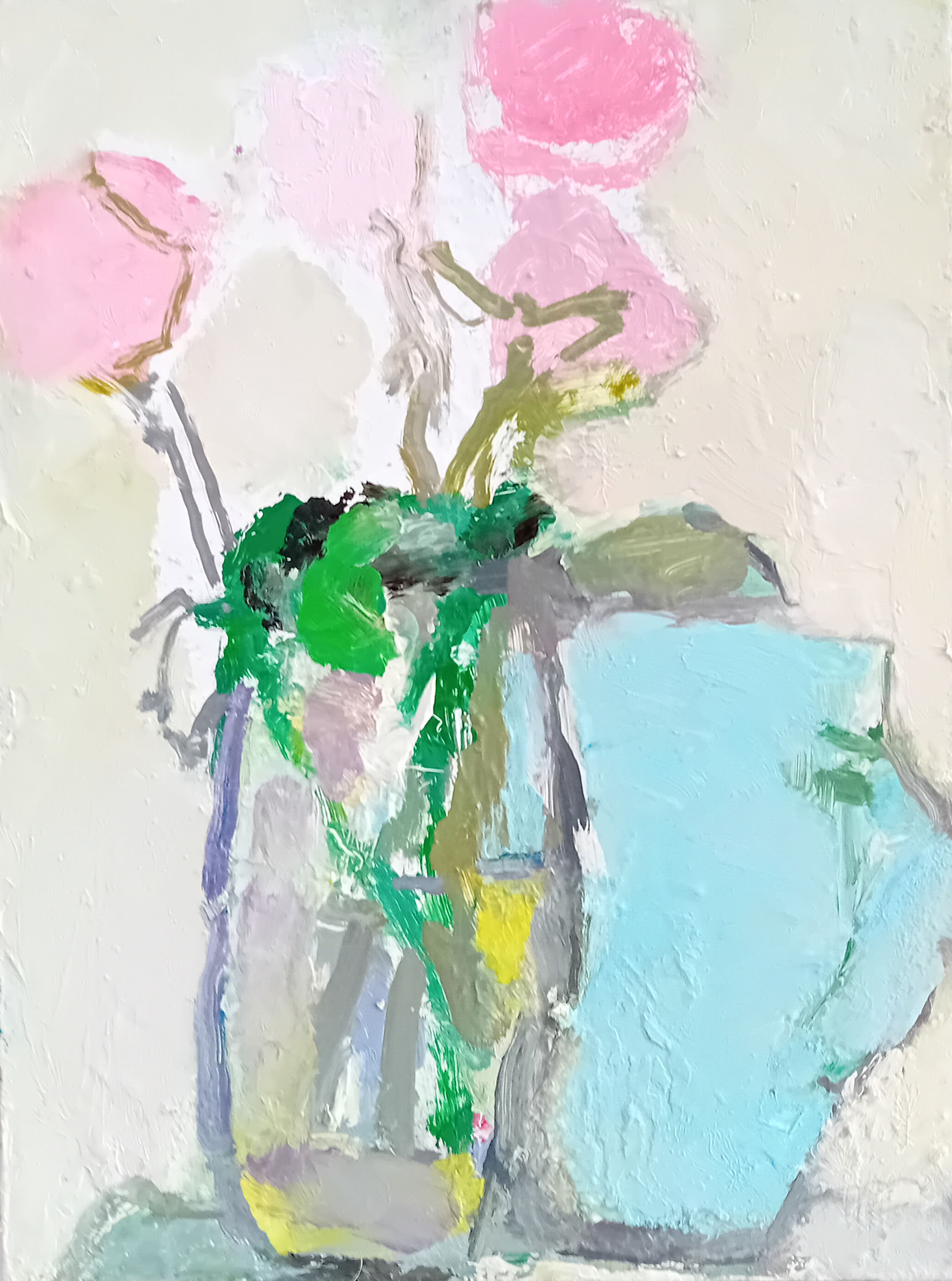
Roses in a Glass with a Blue Mug
When I adjust the background, the tumbler falls off the wall and smashes. With some regret, I replace it with a pint glass.
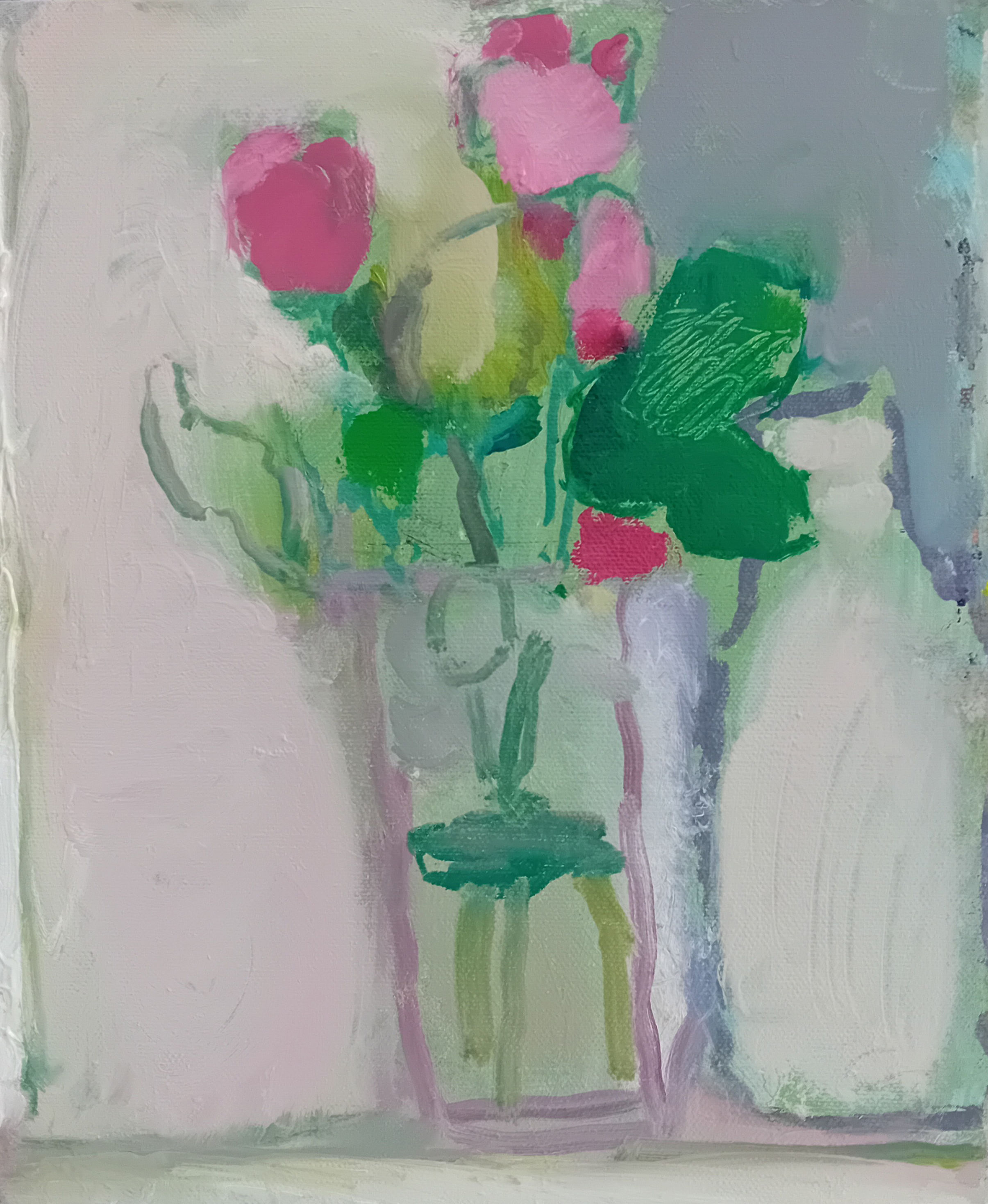
Roses in a Pint Glass with a Milk Bottle
See Michael Weller’s work in Assemble:26 at London’s Tregony Contemporary, 4–17 February 2026, or on GrandyArt’s stand at the Affordable Art Fair in Battersea Park, 4–8 March 2026. A selection of his paintings is also available to view or buy in the NEAC's online shop.
Michael is currently teaching a four-week Zoom workshop, Inspired by Matisse and the Wild Beasts: Turning up the Colour, every Wednesday evening from 28 Jan to 18 Feb 2026 (with Winslow Art Center). Sessions are recorded, so you can catch up on demand at any time.